01 / Rooted in place
A sense of place.
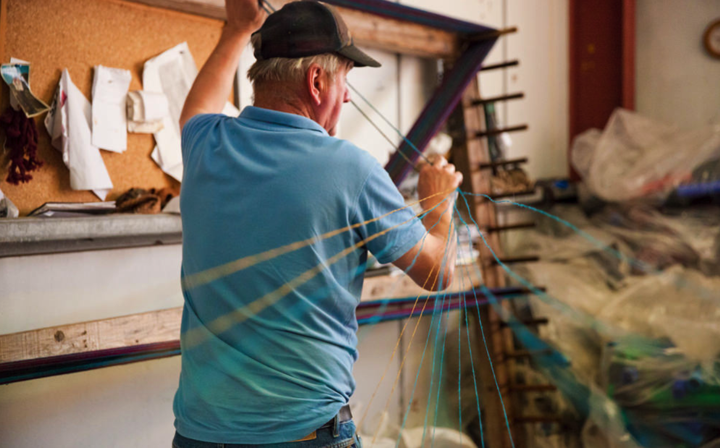
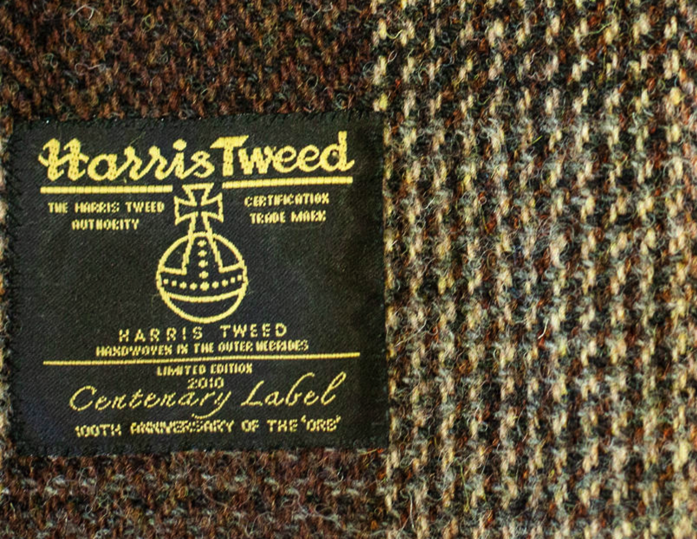
Wool, island weaving and a recognised origin give Harris Tweed its character. A textile carries the knowledge of its makers and the identity of its home.
Luxury can begin with a fundamental craft. At Bottega Veneta, the simple act of interlacing strips is continually refined through material, proportion and finish.
Material, form and finish come together through the weave.
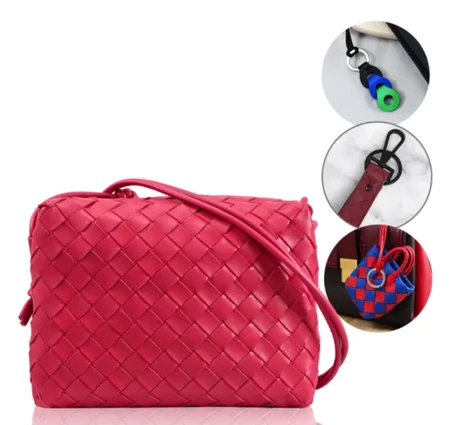
Material / Suppleness and texture.
Form / Volume, proportion and silhouette.
Finish / Edges, joins and transitions.
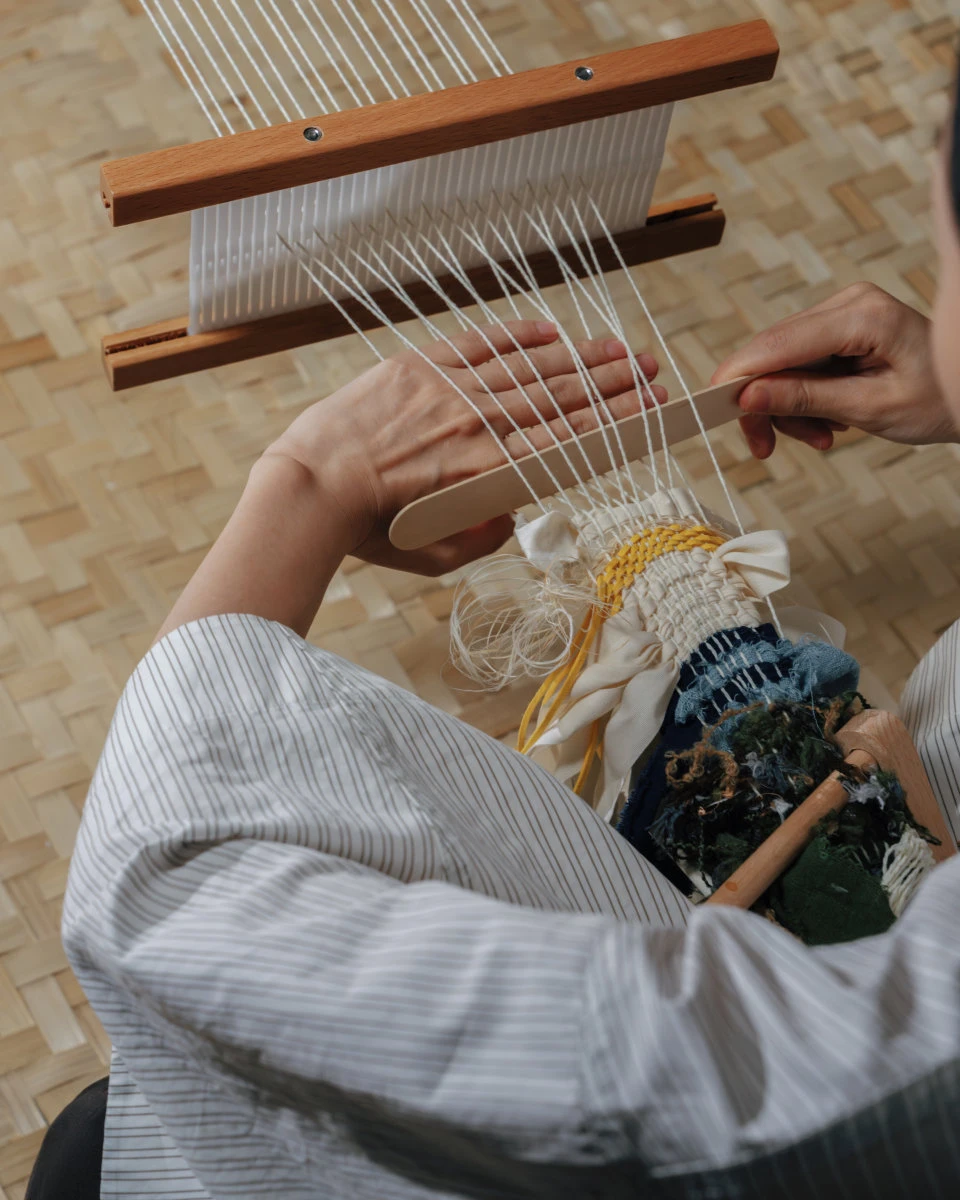
Working with the weave makes its demands tangible: patience, precision and judgement. Participation offers a closer understanding of the craft—and the value of the finished object.
From a familiar cloth to a distinctive wardrobe, the story unfolds through changing materials, construction and ways of wearing.
Swipe to explore the three contexts →
Wool, island weaving and a recognised origin give Harris Tweed its character. A textile carries the knowledge of its makers and the identity of its home.
Tradition lives through use. Familiar clothes carry cultural identity into everyday life; their continued presence gives new design a point of reference.
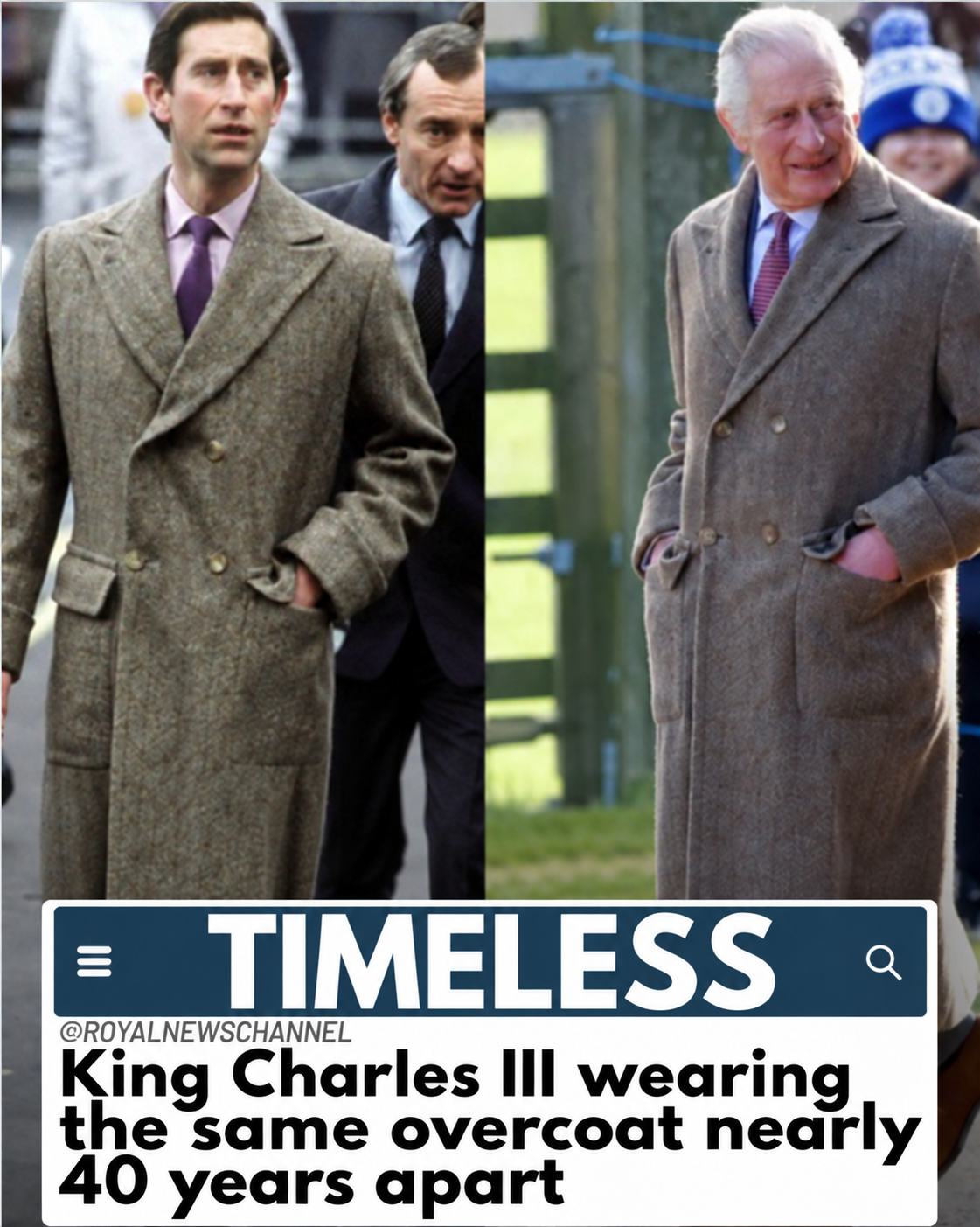
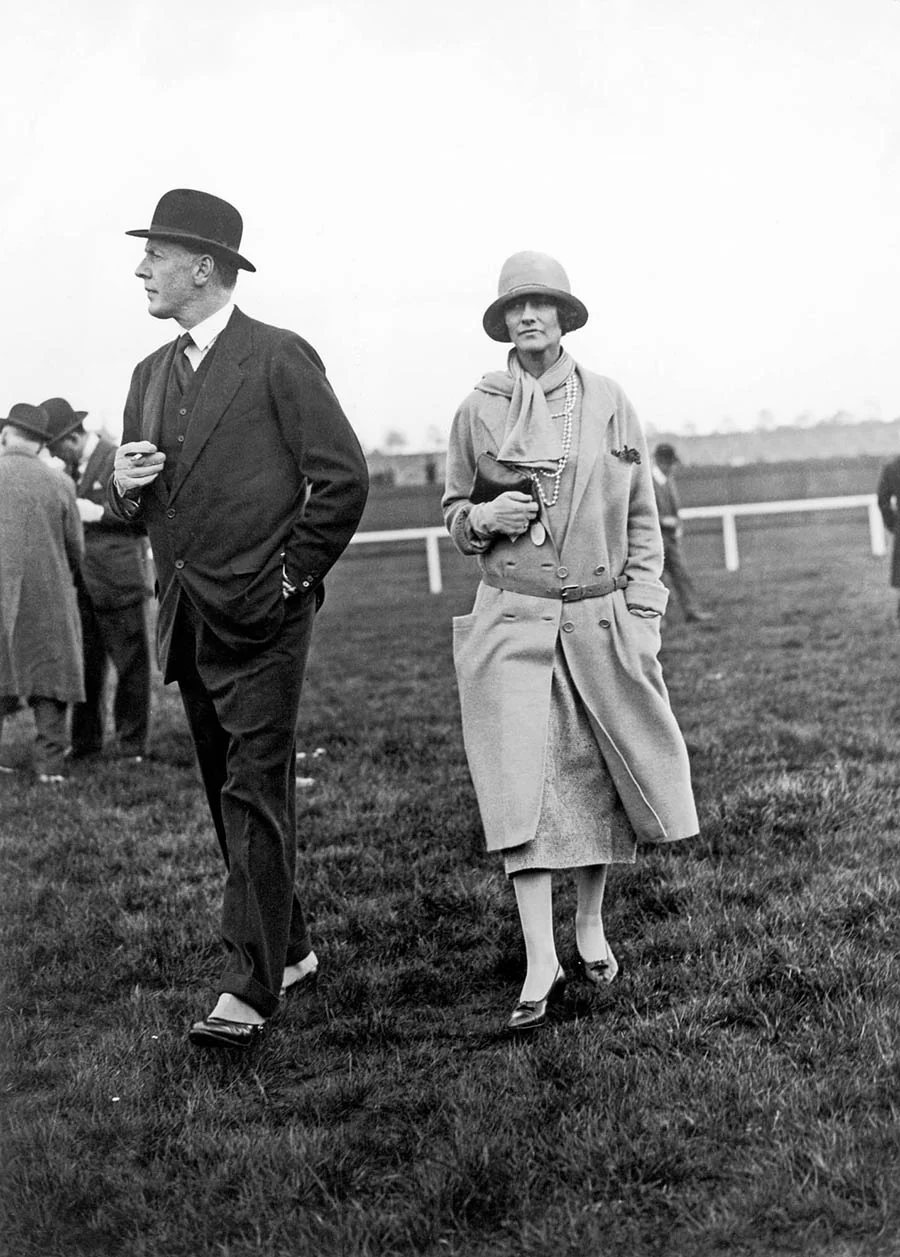
Inspired by British menswear, Gabrielle Chanel brought softer tweeds and supple tailoring into women’s dress. The freedom to move became a principle of construction.
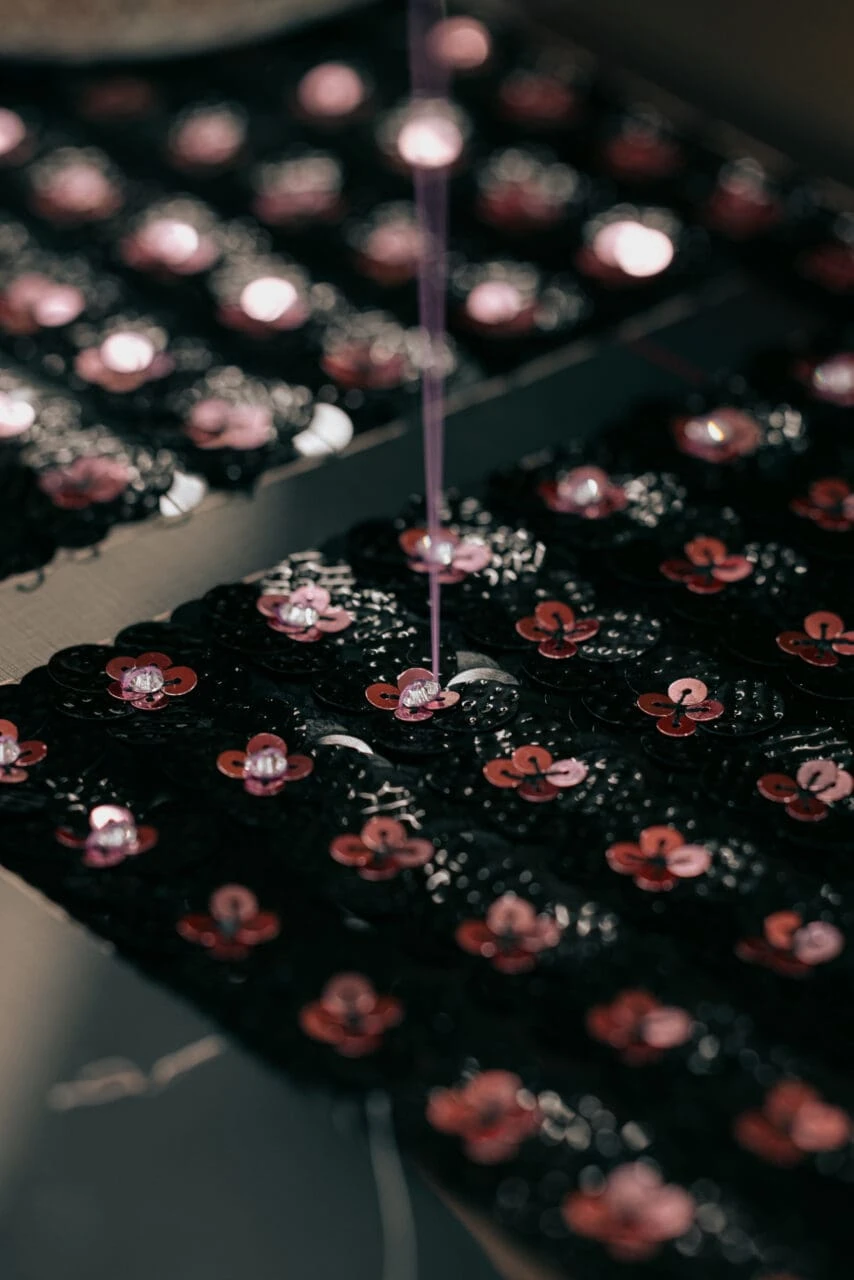
Construction, weaving and embellishment open new possibilities for texture and form.
Swipe to follow the images →
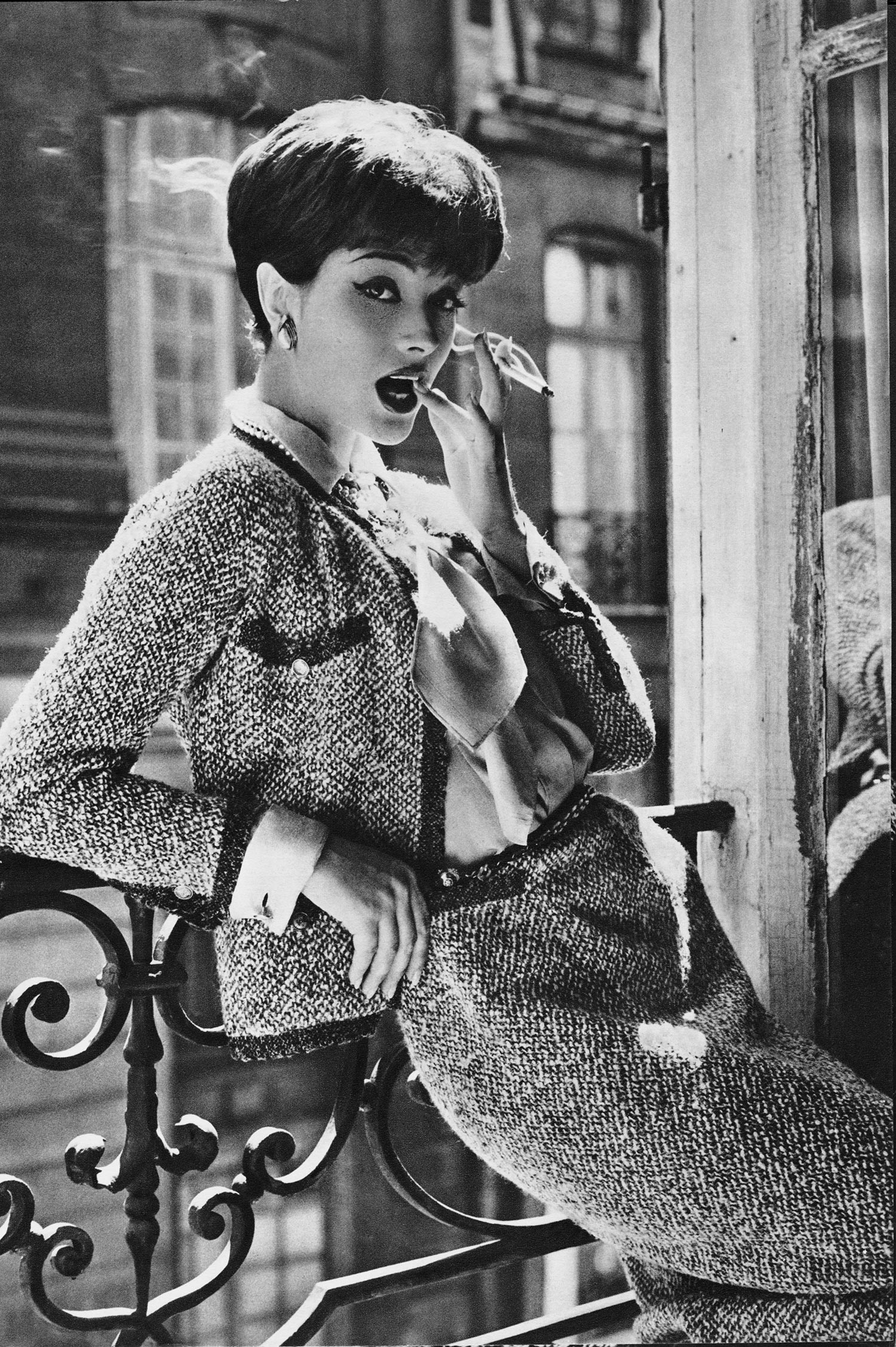
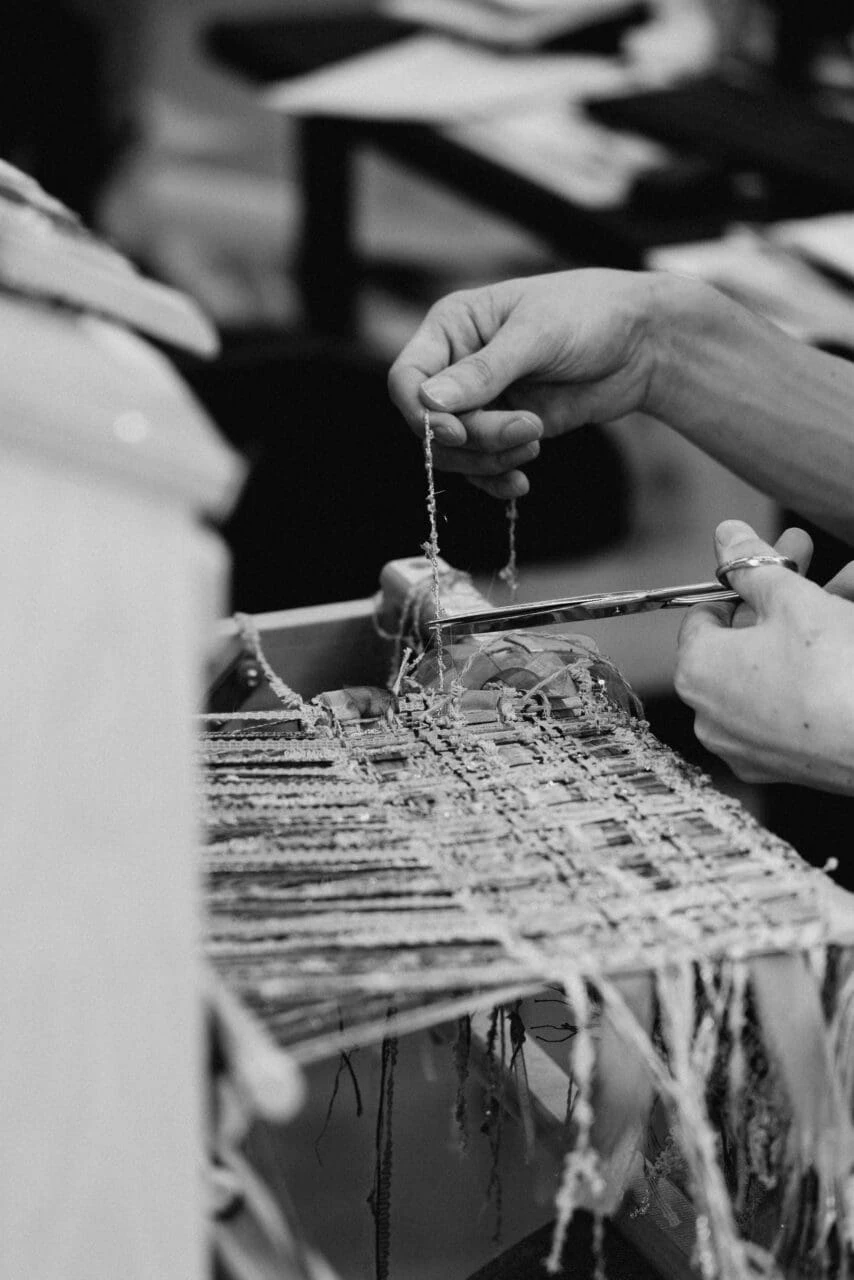
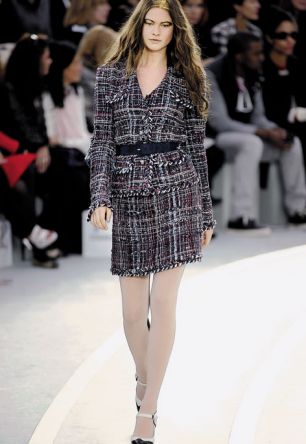
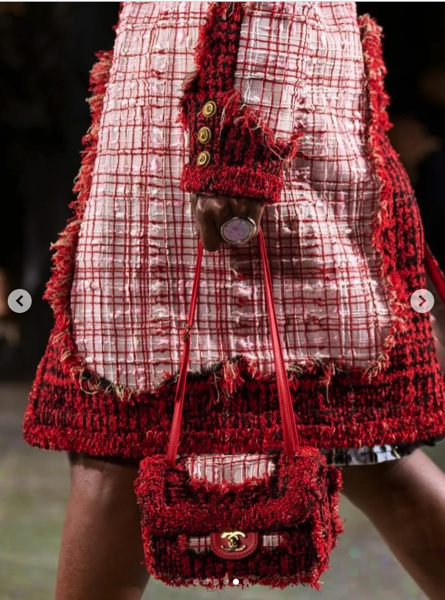
Harris Tweed is a specific regional tradition, not a name for all tweed. The royal comparison is supplied visual context, not verification of a Harris Tweed garment or a forty-year timeline. Images illustrate separate objects, not the construction sequence of one garment.
Harris Tweed Authority · V&A / Chanel in Britain · V&A / CHANEL construction
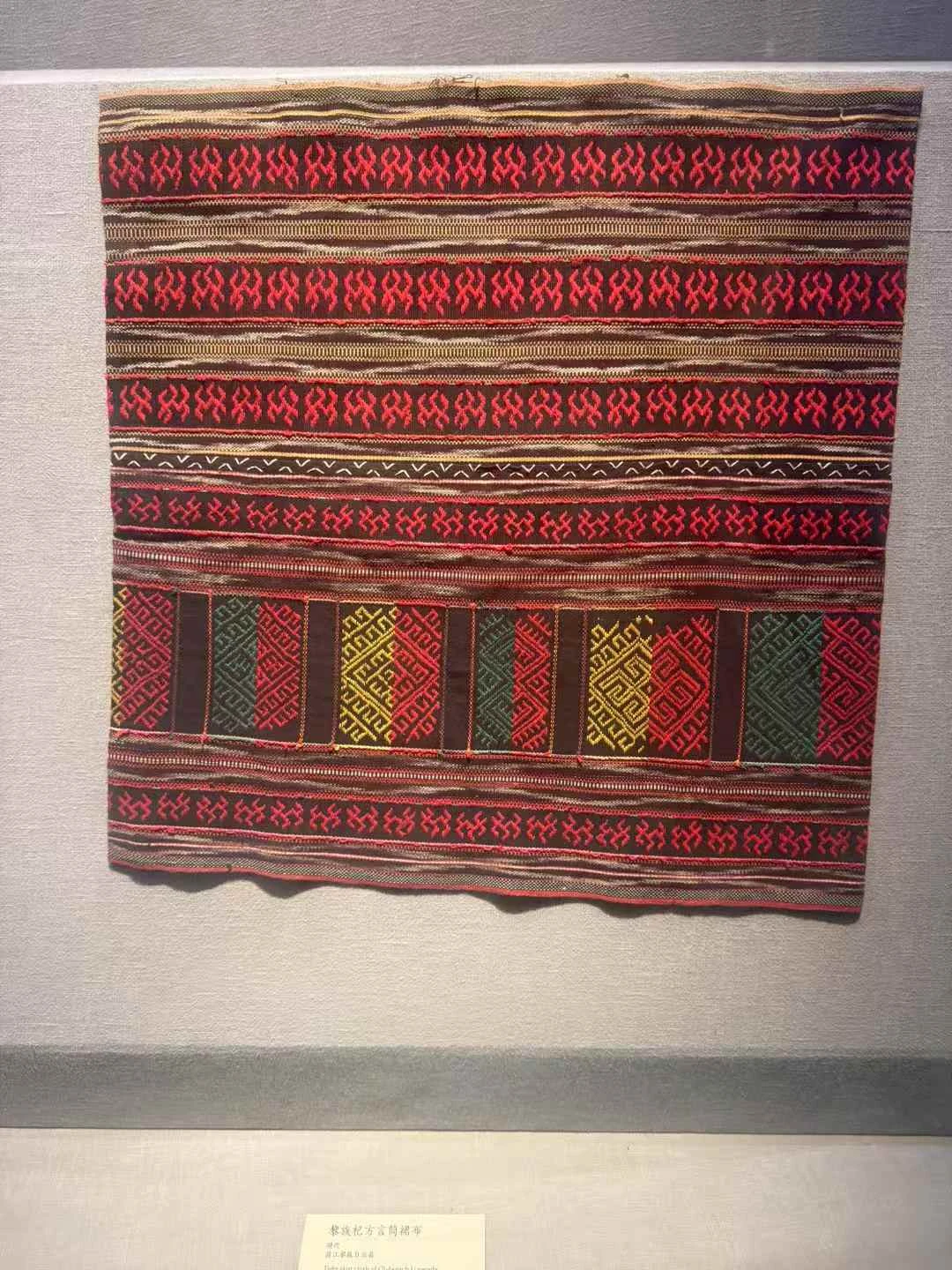
The Li textiles and the fabric of these Dior bags share a similar visual character and woven texture: dense repeating motifs, contrasting threads and a clearly visible weave.
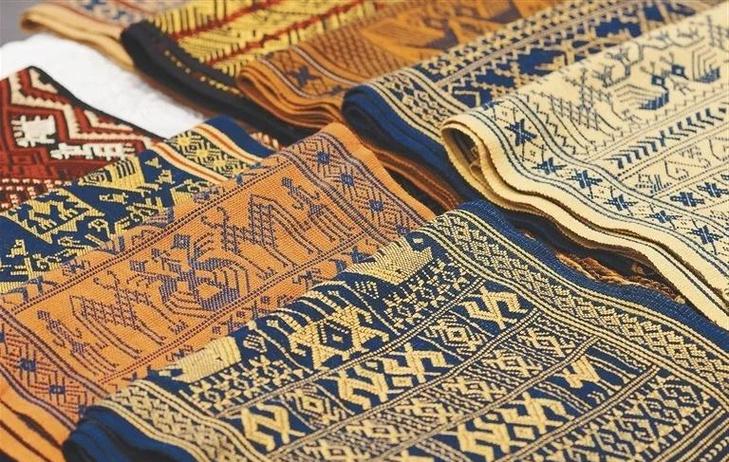
Light motifs stand out against a dark ground. Repeated units and visible threads give the surface its rhythm and texture.
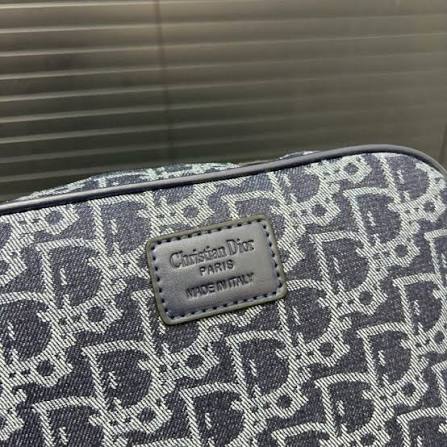
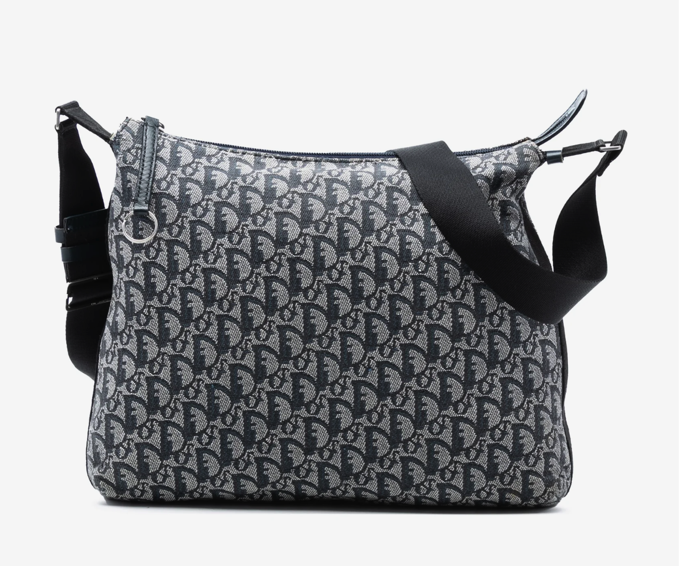
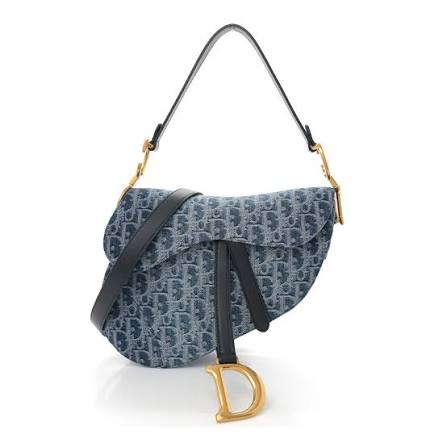
Different motifs and contexts; a comparable visual richness in the woven surface.
The photographs support a visual comparison, not equivalence in fibre, weave structure, production method or quality. No shared origin or collaboration is implied.
Our practice brings research into development: working with motifs, testing materials and exploring how textiles can be worn and used today.
Motif → Sample → Garment → Wearing
Swipe to follow the development →
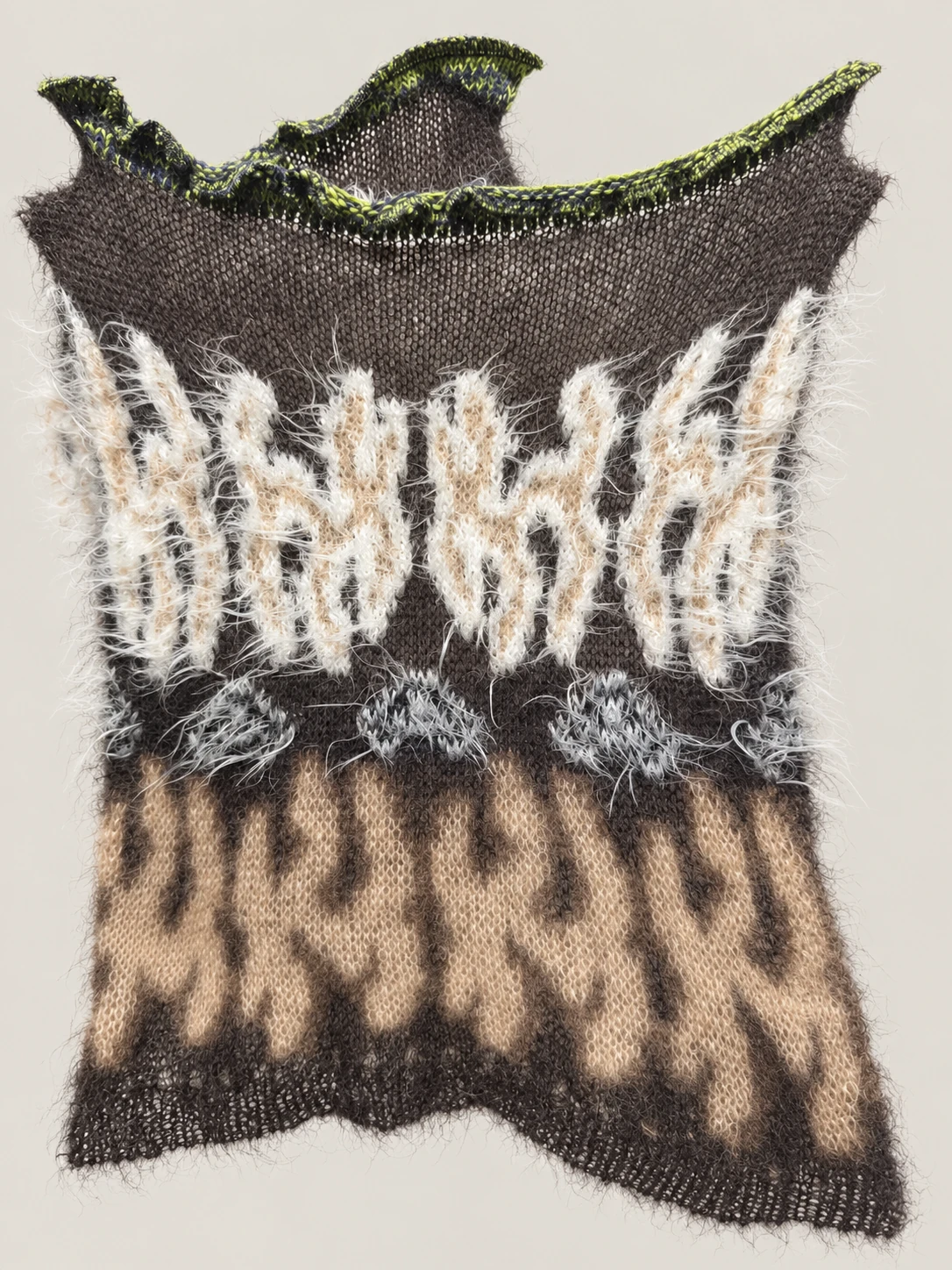
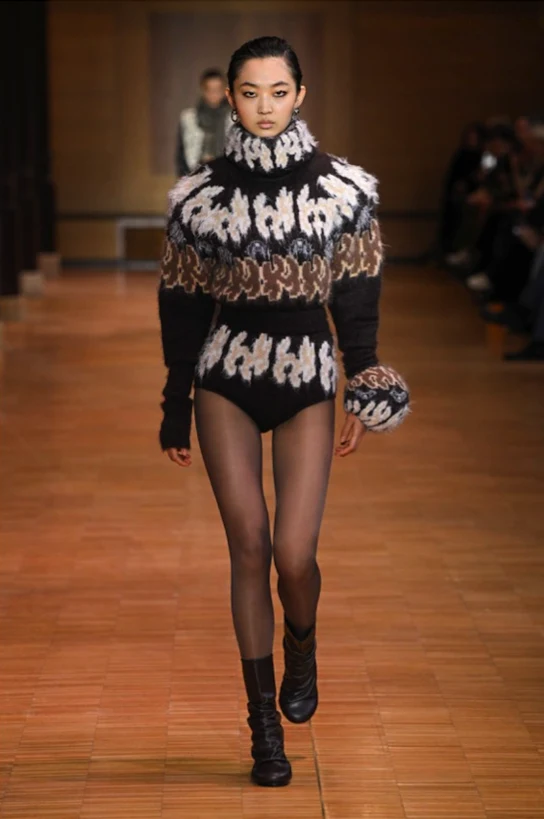
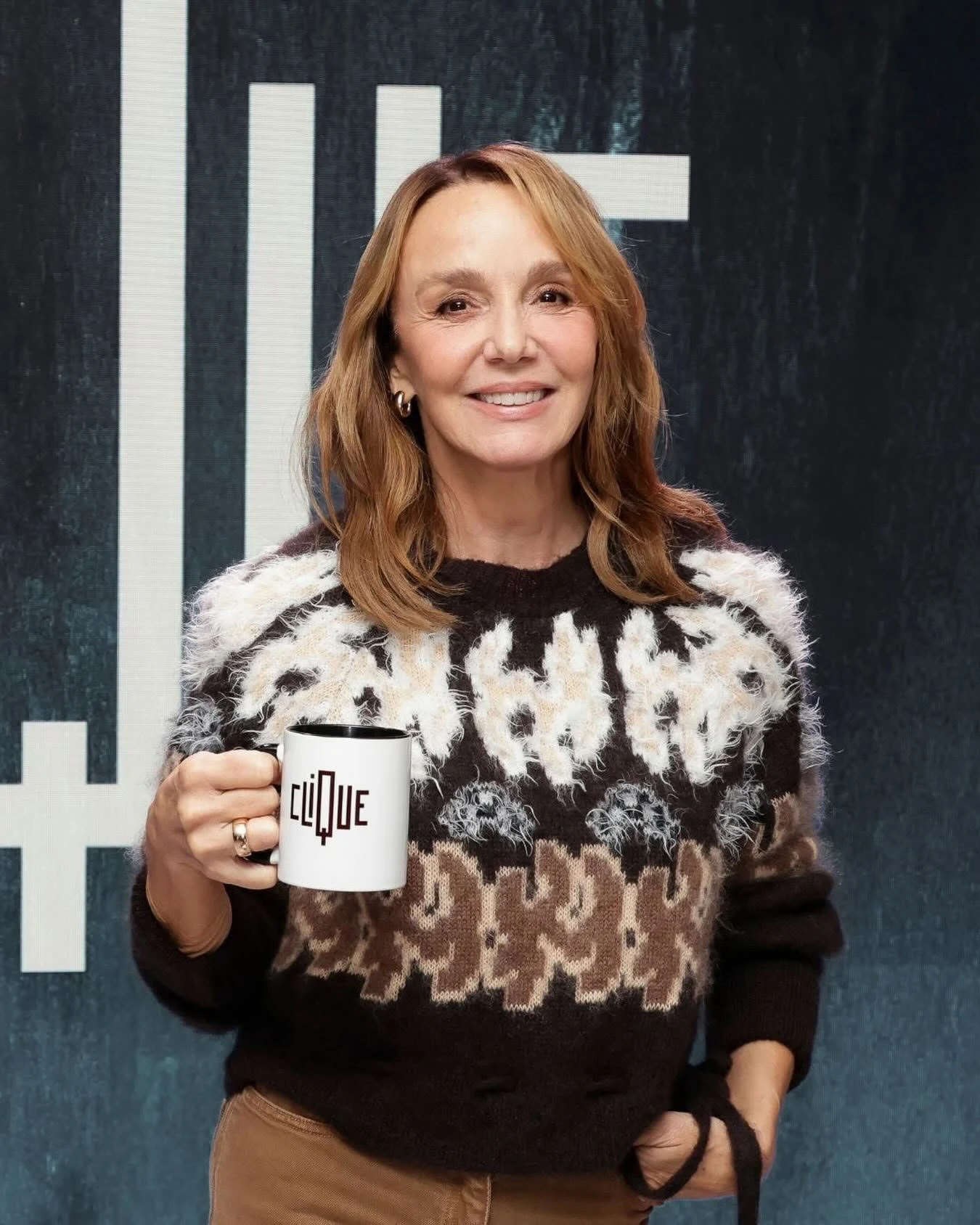
Our mohair jacquard development explores how a motif changes with yarn, scale and texture. The sample, runway look and subsequent wearing bring those choices into view.
A visual comparison, not a claim that this museum textile was the original source for the runway look. Collection details remain to be confirmed.
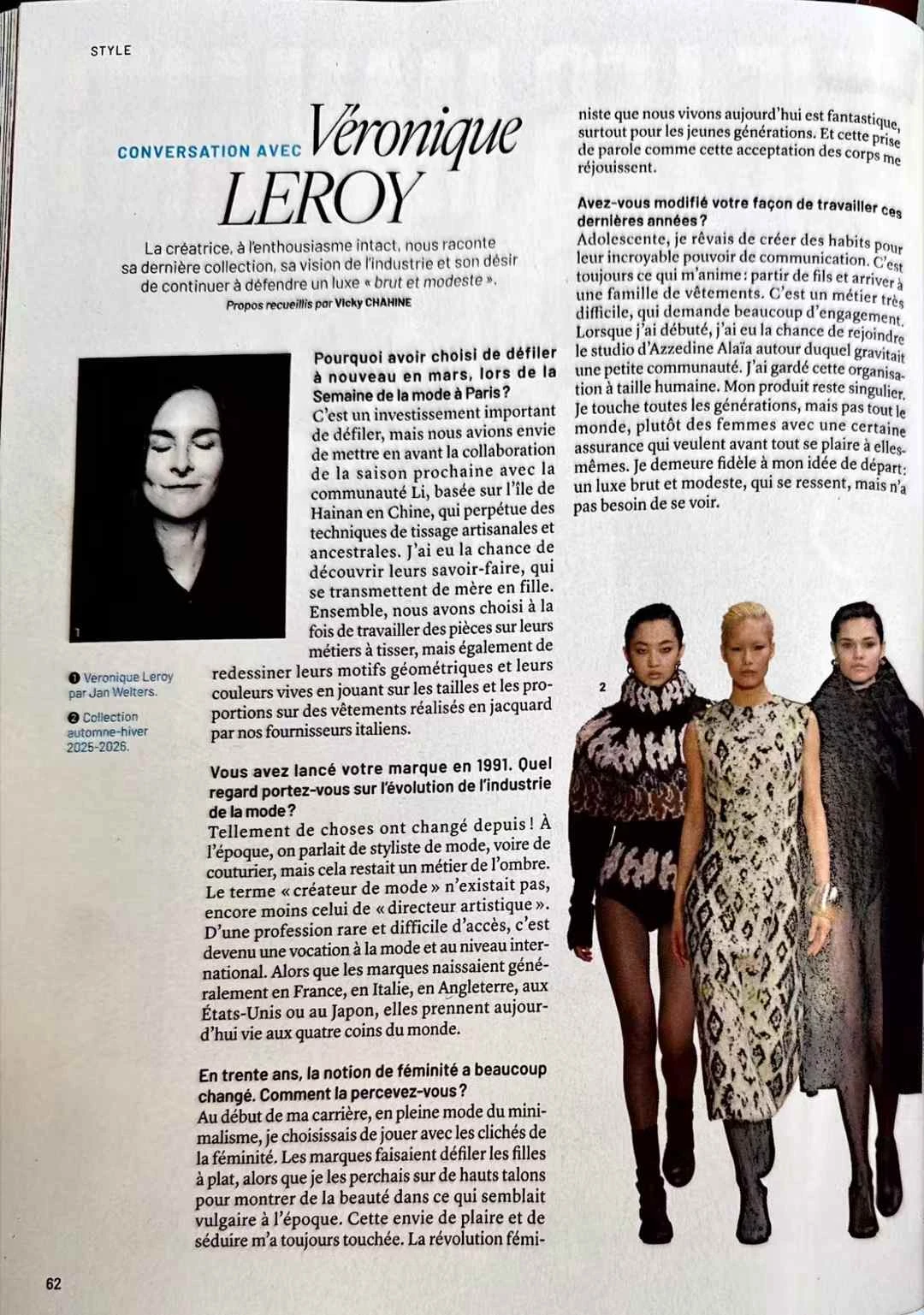
In the supplied interview, Leroy describes collaboration with the Li community in Hainan: working on looms, and reinterpreting geometric motifs and vivid colours through changes of scale and proportion in jacquard garments made by Italian suppliers.
Paraphrased from the supplied French interview.
Collection information and images: LIJIN ELEMENTS.
Explore Li Textiles: Runway & Celebrity StyleWaistband → Reinterpretation → Shawl → Gifting
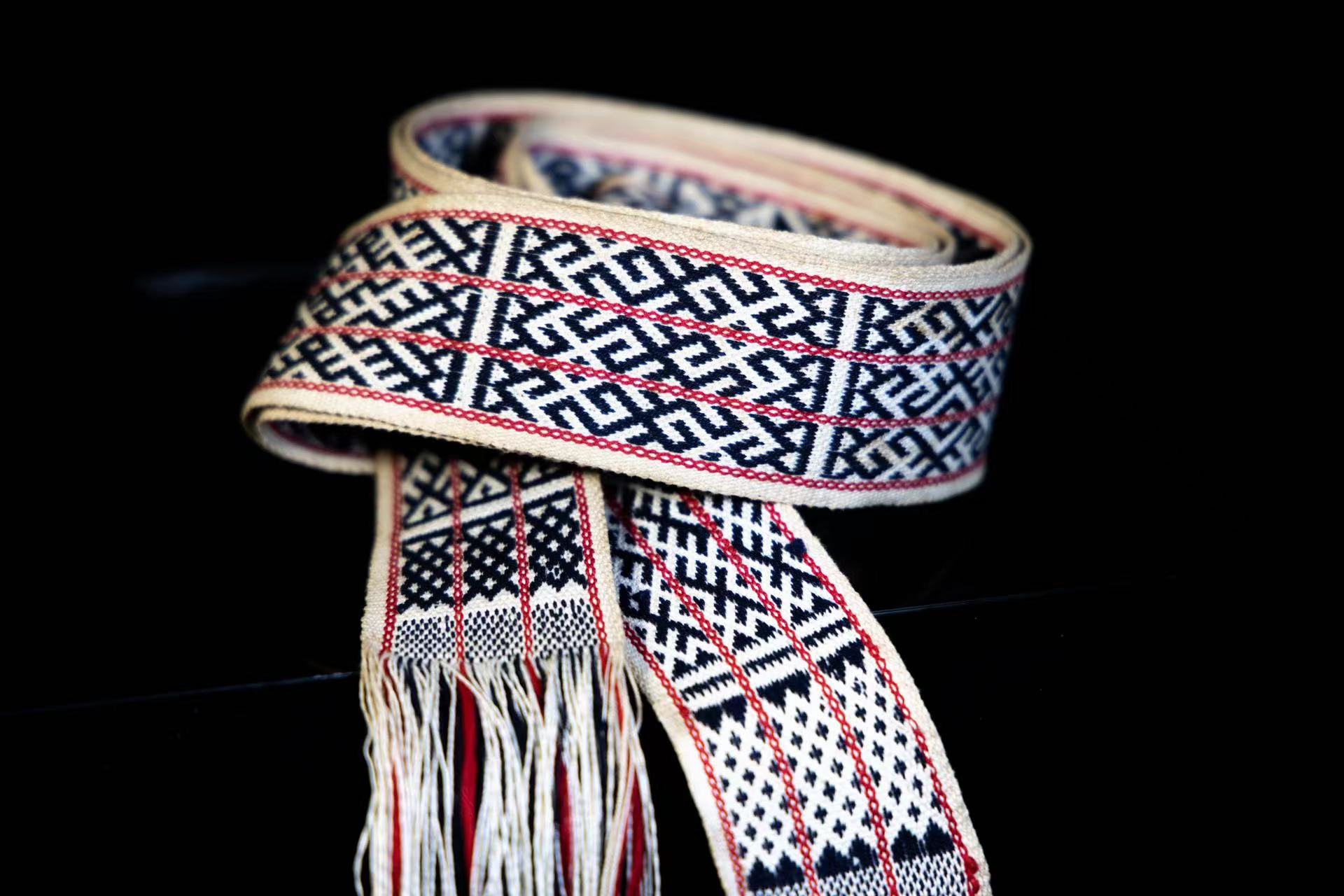
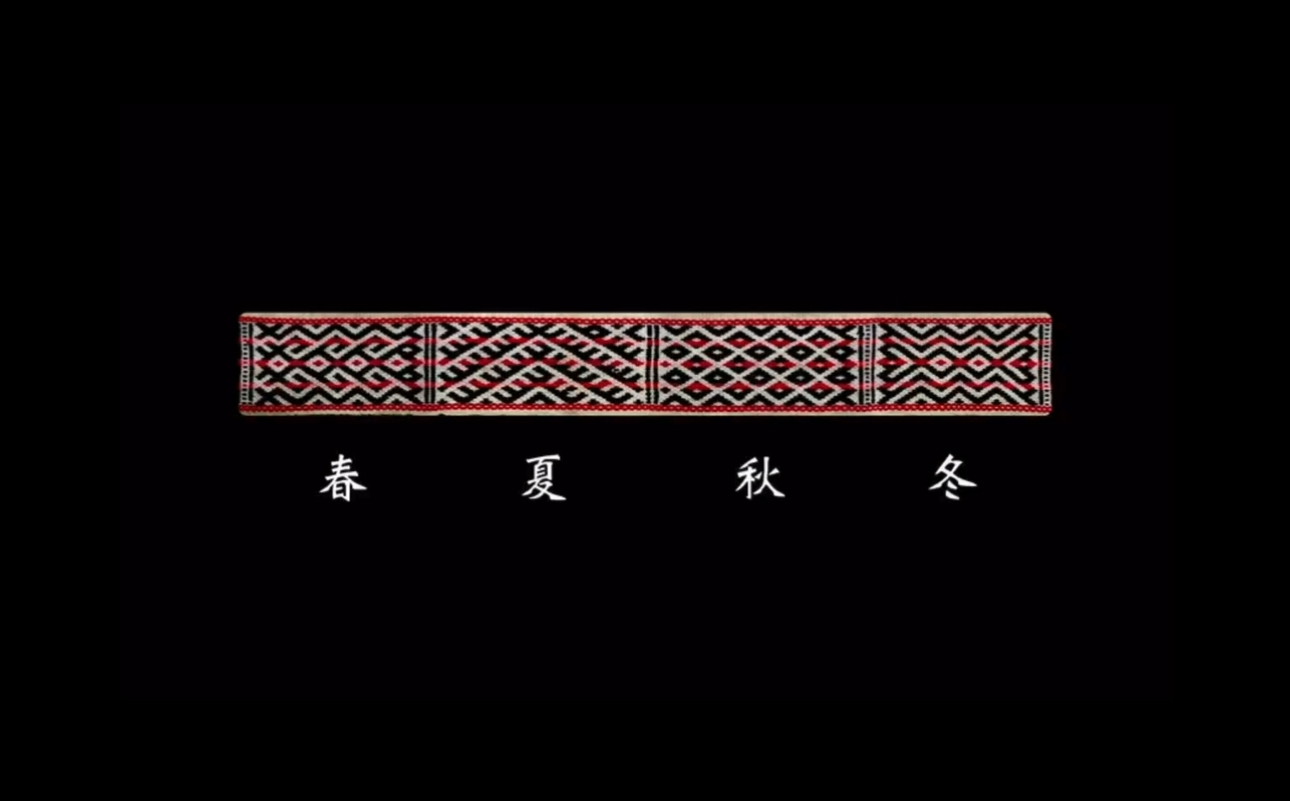
We reworked the waistband’s four-season motifs through composition, colour and material, developing a wool-and-silk shawl for wearing and gifting.
The use and material change; the seasonal associations remain part of the design story.
Begin with the waistband and its pattern organisation.
Rework the four-season motifs, composition and colour.
70% wool, 30% mulberry silk. A new material for everyday wear.
A cultural gift at the Hainan Island International Film Festival.
Presented as film festival gifts in Sanya, the shawls bring the design into a public occasion: an object to wear, give and carry away.
Specifications follow the supplied shawl design notes.
Sources & image credits / CHANEL craft photographs: CHANEL 2024/25 Métiers d’art, Lesage, © CHANEL. Runway and workshop images are separate references, not a documented sequence for one garment. Independent commentary; no brand affiliation or endorsement is implied.
Material. Form. Finish.
Participation → Understanding craft → Recognising value.
From a local textile tradition to a new relationship between clothing and the body.
Structure → Weaving → Embellishment → Silhouette → Reinterpretation.
Repeated motifs, contrasting threads and visible woven texture. A visual comparison, not a claim of identical materials.
A patterned surface carried across different forms.
Véronique Leroy × Lijin / Motif → Sample → Garment → Wearing.
Waistband → Reinterpretation → Shawl → Gifting.
Bring your group, interests and questions.